Doodle Music Art: A Creative Font for Branding Projects
There’s something oddly satisfying about opening a brand board and seeing a blank canvas. It’s a moment of possibility, where every decision feels fresh and full of potential. That’s exactly how I felt when I first tested Doodle Music Art for a new café project. As a designer, I’m always on the lookout for fonts that can elevate a brand without overpowering it. Doodle Music Art caught my eye with its playful yet refined character—perfect for a creative space like a café that wants to feel both welcoming and stylish.
A Font That Speaks in Visual Language
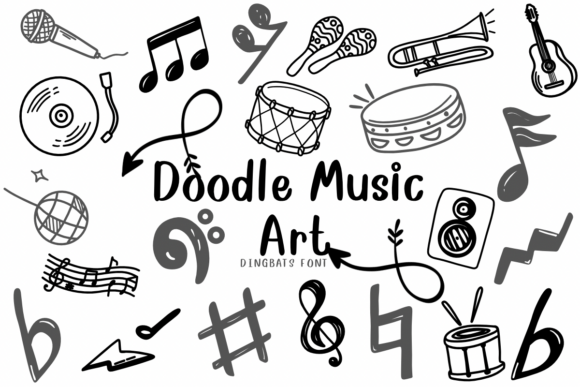
Doodle Music Art is a dingbats font, but don’t let that term fool you—it’s far from basic. It’s a typeface that tells a story through its design. Each character has a distinct, handcrafted feel, as if someone took time to sketch each symbol with care. The font carries a whimsical tone, but it also maintains a level of sophistication that makes it versatile for various design applications.
When I first placed Doodle Music Art on a logo draft for the café, I was immediately drawn to its visual rhythm. The curves and lines felt natural, almost musical, which aligned perfectly with the café’s theme of harmony and creativity. It wasn’t just about aesthetics; it was about creating a visual language that resonated with the brand’s personality.
From Logo Drafts to Final Brand Materials
The process began with a simple mockup. I started by testing the font in different contexts—on a logo, a tagline, and even a sample menu. What stood out was how Doodle Music Art could work both as a headline font and an accent typeface. Its bold shapes made it ideal for short-form text, like logos or social media headers, while its subtle variations allowed for more nuanced use in supporting text.
One of the most interesting aspects of Doodle Music Art is its ability to blend into a variety of design styles. I paired it with a clean sans serif font for contrast, using it as an accent in headers and callouts. This pairing helped maintain readability while adding a touch of personality to the brand materials. On packaging, I used the font for product names and labels, ensuring it remained legible at smaller sizes.
Testing the font across different mediums was crucial. I checked how it looked on a shop sign, business card, label sticker, and even the homepage hero section of a website. In every case, Doodle Music Art maintained its charm without losing clarity. It worked well in both digital and print formats, which is a big plus for any branding project.
Design Observations and Practical Insights
As I continued working with Doodle Music Art, I noticed a few key observations. First, it’s best suited for display purposes rather than long-form text. While it’s readable in short phrases, it can become visually overwhelming when used in large blocks of content. That means it should be used strategically—perhaps as a headline, logo, or decorative element rather than the primary body text.
Another thing I learned was the importance of font pairing. Doodle Music Art works beautifully with serif fonts for a classic, elegant look or with modern sans serifs for a contemporary feel. I found that combining it with a script or handwritten font added a layer of warmth and authenticity, especially for creative studios or handmade shops.
Before committing to a full brand system, I recommend testing the font in multiple contexts. Print and digital formats can behave differently, so it’s important to see how Doodle Music Art performs in real-world applications. Also, consider checking for included styles, ligatures, weights, and multilingual support—these features can enhance the font’s versatility and usability in a broader range of projects.
Real-World Applications and Recommendations
Whether you’re designing a logo, packaging, social media graphics, or editorial content, Doodle Music Art offers a unique way to add character to your work. I’ve used it in everything from Instagram posts and flyers to website headers and printed marketing materials. Its playful nature makes it a great fit for creative brands that want to stand out in a crowded market.
For small businesses or entrepreneurs looking to build a strong visual identity, Doodle Music Art can be a valuable asset. It adds a sense of personality and creativity without sacrificing professionalism. When paired with other fonts and design elements, it helps create a cohesive brand system that feels intentional and well-thought-out.
One final thought: always check the licensing terms before using a font commercially. Doodle Music Art is a premium font, and understanding its usage rights ensures you’re using it correctly in client work or personal projects. With the right approach, this font can become a staple in your design toolkit.